The essential decision
Select upholstery according to the sofa model, room conditions and expected use. Appearance is important, but the most suitable fabric must also support comfort, maintenance and long-term practicality.
Upholstery covers a large visual surface and strongly influences how a luxury sofa is perceived. The same silhouette can appear soft and relaxed in one textile or structured and formal in another.
Fabric should therefore be selected as part of the complete sofa design rather than treated as a final colour choice. Texture, weave, pile direction and light reflection can all change the apparent proportions and character of the furniture.
1. Begin with the way the sofa will be used
Start by identifying where the sofa will be placed and how frequently it will be used. A formal reception room and a main family living room may require different upholstery priorities.
Consider the number of users, frequency of entertaining, exposure to food and drinks and whether children or animals will use the room. These conditions help define realistic maintenance and durability requirements.
Match the fabric to the room
Sunlight, humidity, heating and ventilation may affect how a textile performs and appears. Record direct sunlight exposure and discuss any demanding room conditions before confirming the upholstery.
A fabric that looks excellent in a showroom may appear different under warm residential lighting or strong natural daylight. Evaluate the sample in the intended room whenever possible.
2. Understand the fibre composition
Upholstery fabrics may use natural fibres, manufactured fibres or blended constructions. Each option can provide a different balance of softness, appearance, resilience and maintenance.
Do not judge quality from a single fibre name. Final performance also depends on yarn quality, weave density, surface construction, finishing and how the textile is applied to the furniture.
Blended upholstery fabrics
Blends may combine visual softness with practical performance. The exact composition should be evaluated together with the available care information and the intended use of the sofa.
Ask for technical and maintenance information where available rather than relying only on broad descriptions such as premium, soft or stain resistant.
3. Examine weave, pile and surface texture
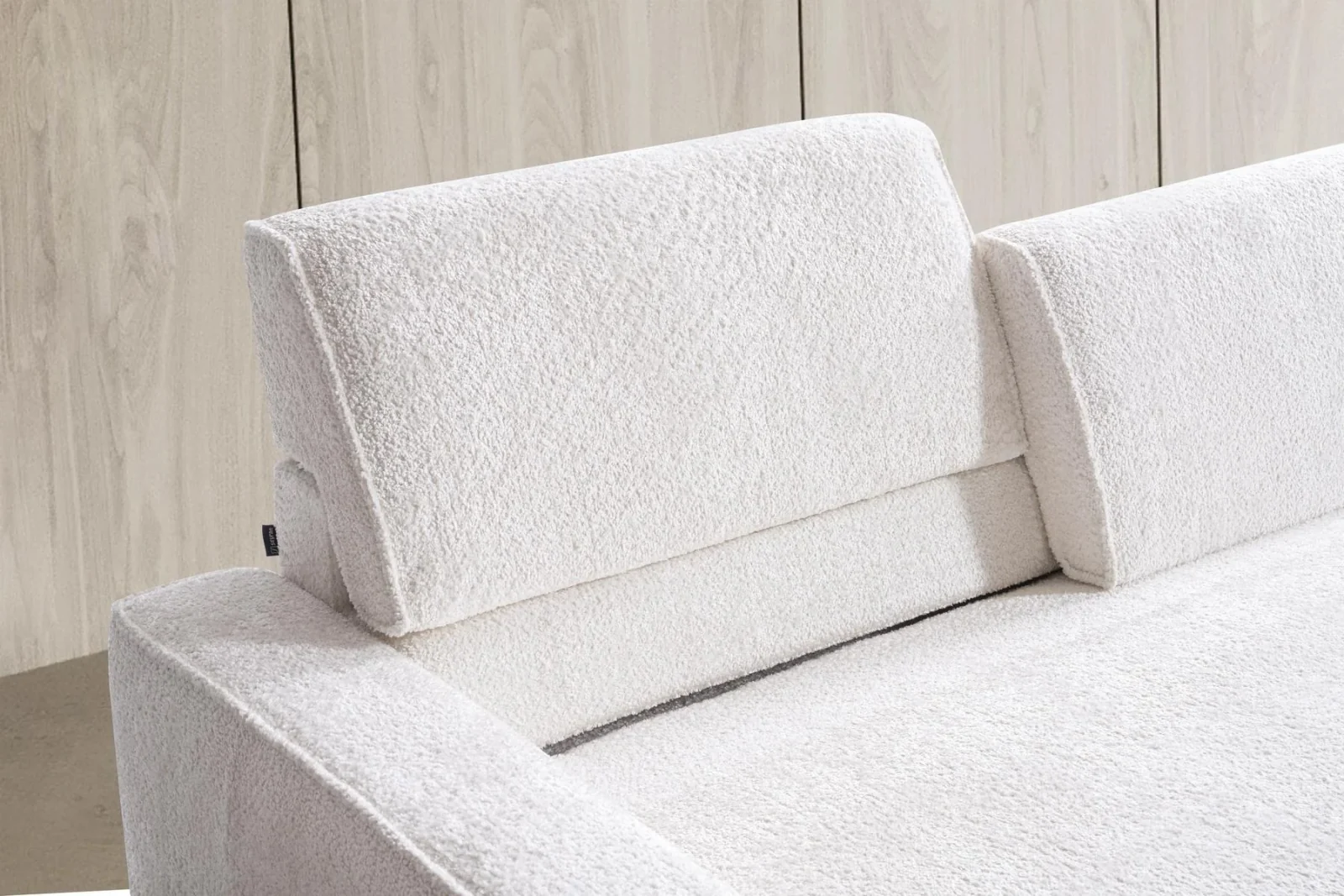
The structure of the fabric affects visual depth and how it interacts with the sofa shape. Fine weaves can create a clean, controlled appearance, while pronounced textures may make a large sofa feel softer and more tactile.
Textured or looped surfaces require close evaluation. Their beauty comes from visible depth, but their suitability depends on the room, expected use and maintenance preferences.
Check the direction of the surface
Some fabrics change appearance when brushed in different directions or viewed from different angles. This effect may be especially visible across wide seat cushions, curved arms and large back panels.
Confirm how the textile will be positioned and whether changes in shade or direction are part of its natural visual character.
Read ourcomplete luxury sofa buying guideand explore theVIRELLAART living room collection.
To compare upholstery within a more formal, decorative composition, explore theVizyon Sofa Set.
4. Evaluate durability beyond fabric thickness
A heavy-looking fabric is not automatically the most durable. Resistance to wear depends on fibre type, yarn, weave density, surface construction, finishing and the conditions of use.
Review available technical information for fabrics intended for frequent use. Compare options within the context of the actual sofa instead of selecting a textile from one specification alone.
Consider seams and cushion construction
Upholstery performance is connected to the complete furniture construction. Curves, seams, removable cushions and decorative details may place different demands on a textile.
A suitable fabric should follow the form of the sofa cleanly and support the intended tailoring without unnecessary distortion, pulling or visual interruption.
5. Select colour under the correct lighting
Colour should be compared with flooring, wall finishes, curtains, rugs, tables and other upholstered pieces. Avoid evaluating sofa colour from a phone or computer screen alone.
Neutral shades can provide long-term flexibility, but they are not identical. Warm ivory, cool grey, beige and taupe may react very differently to timber, stone, metal and artificial light.
Consider the visual size of the sofa
Light colours may emphasize the full silhouette and surface detail of a large sofa. Dark colours can create depth and visual weight. Strong colours may turn the sofa into the main focal point of the room.
Review colour across a sufficiently large sample because a small swatch may not reveal how the shade will appear over several metres of upholstery.
6. Consider touch, temperature and seating comfort
Upholstery is in direct contact with the user. Compare the softness, surface temperature and tactile character of suitable samples rather than focusing exclusively on appearance.
A highly textured fabric may look inviting but feel different against bare skin. A smoother textile may feel cooler or more formal. The correct choice depends on the intended experience and climate of the room.
Connect fabric with the sofa design
Deep, relaxed seating may suit a softer textile character, whereas sharply tailored forms may benefit from a fabric that supports precise edges. This is a design consideration rather than a universal rule.
Curved sofas, buttoned upholstery and structured arms may also display texture differently. Evaluate the sample together with photographs of the selected model.
7. Plan cleaning and maintenance before ordering
Request the correct care instructions for the selected upholstery. Cleaning methods can differ substantially, and an unsuitable product or technique may permanently affect colour, texture or finish.
Consider whether removable cushion covers are available for the selected model and whether professional upholstery cleaning may be required. Do not assume that every textile can be washed or treated in the same way.
Respond to spills carefully
Follow the specific care guidance supplied for the textile. Avoid aggressive rubbing, excessive moisture or unapproved chemicals. When uncertain, obtain professional advice before treating the fabric.
Regular gentle maintenance can also reduce the accumulation of dust and help preserve the intended appearance of the surface.
8. Approve the upholstery sample carefully
Examine the sample in daylight and evening lighting. Place it beside flooring, curtains, rugs and furniture finishes to assess the complete interior relationship.
View the textile from several directions and touch the surface. Photographing the sample can be useful for records, but the physical sample should remain the primary reference.
Information to provide with an enquiry
- The selected sofa model or product link
- The intended room and frequency of use
- Preferred colour family and texture
- Relevant maintenance expectations
- Room photographs and lighting conditions
- The destination city and country
- Any essential customization request
Final upholstery selection checklist
VIRELLAART guidance
Select upholstery as part of the complete sofa design
The best fabric balances appearance, comfort, maintenance and intended use. Compare its colour and texture together with the full sofa silhouette and surrounding interior.
VIRELLAART can discuss suitable upholstery and colour options according to the selected model and available made-to-order production choices.
Frequently asked questions
Luxury sofa fabric FAQ
What should I consider when choosing luxury sofa fabric?
Consider how frequently the sofa will be used, room conditions, preferred texture, maintenance expectations, colour, weave, sunlight exposure and the complete design of the sofa.
Is thicker upholstery fabric always more durable?
Not necessarily. Durability depends on fibre composition, weave, surface construction, finishing and intended use rather than thickness alone.
Should I choose sofa fabric from a photograph?
Photographs help narrow the options, but a physical sample is more reliable for evaluating colour, texture, softness, scale and appearance under room lighting.
Which sofa colours are easiest to coordinate?
Neutral colours are often flexible, but the best choice depends on flooring, walls, curtains, lighting, other furniture and the atmosphere you want to create.
Can VIRELLAART help with upholstery selection?
VIRELLAART can discuss suitable upholstery and colour options according to the selected sofa model, intended use and available made-to-order production choices.