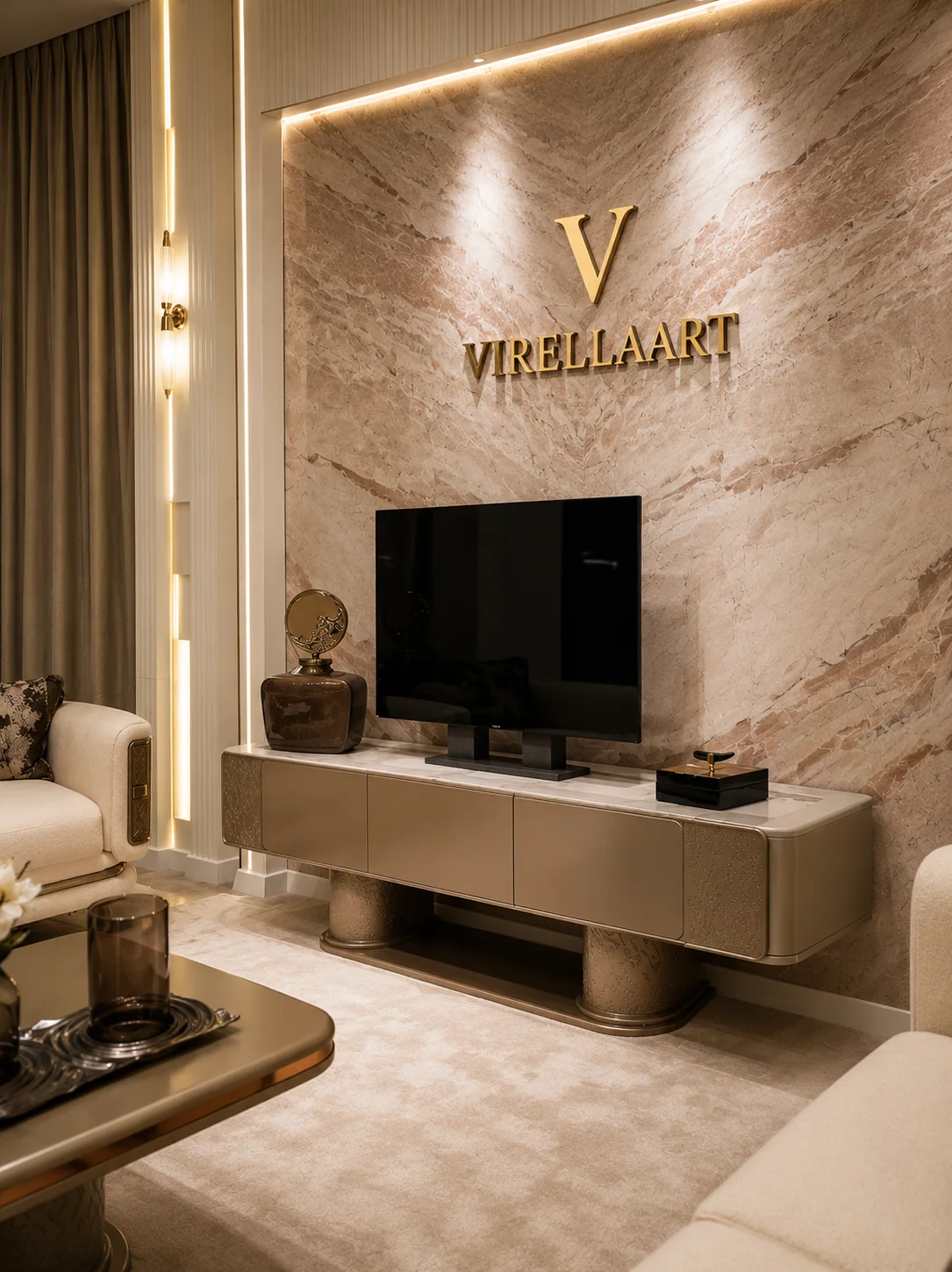
The essential decision
The right luxury TV unit is not simply a decorative cabinet. It must support the television and media equipment, organize storage, conceal visual clutter and remain proportionate to the wall and surrounding furniture.
The television wall often becomes one of the principal visual areas of a living room. A unit that is too small can appear disconnected from the screen, while an oversized composition can dominate the room and reduce circulation.
Begin with the television, wall dimensions and equipment requirements. Decorative preferences should complete the design only after scale, viewing comfort, ventilation and cable access have been planned.
1. Measure the complete television area
Measure the usable wall width and height as well as the available floor area. Doors, windows, curtains, radiators, columns, switches and architectural details may reduce the practical space available for the TV unit.
Include surrounding furniture in the plan. The TV unit should have a clear relationship with the sofa, armchairs, coffee table and main circulation routes rather than being evaluated as an isolated object.
Check the wall construction
Wall-mounted televisions, shelves and upper cabinets require a suitable supporting structure. Confirm the wall type and installation requirements with qualified professionals before drilling, mounting or routing electrical connections.
Measure delivery access
Long cabinets and large wall panels must pass safely through entrance doors, corridors, staircases and lifts. Communicate any narrow access conditions before production and international delivery are confirmed.
2. Confirm the television dimensions
Television size is commonly described by the diagonal screen measurement, but furniture planning requires the complete width, height and depth of the television. Include the stand or wall bracket where relevant.
A balanced composition normally provides visual space around the television. The cabinet should not look narrower than the screen, while decorative panels and storage elements should not crowd the television or restrict ventilation.
Consider future television upgrades
Buyers who expect to replace the television in the future may benefit from allowing additional width and flexible cable access. However, excessive empty space can weaken the current composition, so future planning should remain realistic.
3. Plan viewing height and seating alignment
The television should be positioned for comfortable viewing from the primary seating area. The correct height depends on sofa dimensions, viewing distance, screen size and whether the television will stand on the cabinet or be mounted on the wall.
Avoid placing the screen unnecessarily high simply to create space for decoration. Prolonged upward viewing may feel uncomfortable. Follow the television manufacturer’s installation guidance and evaluate the screen from the actual seating position before confirming the layout.
Control reflections and daylight
Windows and strong lighting can create reflections on the screen. Study the direction of daylight and the position of lamps before fixing the television wall. Curtains and controlled lighting can improve both viewing comfort and atmosphere.
Explore theVIRELLAART luxury TV unit collectionor discover ourTV unit collection.
4. Calculate storage and display requirements
List every item that the TV unit must accommodate. This may include media equipment, controllers, remote controls, books, decorative objects and frequently used living room accessories.
Closed cabinets help reduce visual clutter, while open shelves provide accessible display space. A combination of both can create practical storage without making the wall appear too heavy.
Plan drawers and doors carefully
Doors and drawers require clear opening space. Confirm that they will not collide with coffee tables, rugs, speakers or nearby furniture. Handles and decorative projections should also be considered when calculating circulation.
5. Organize cables, equipment and ventilation
Cable management is essential to a refined television wall. Power cables, signal cables and accessory connections should be planned before installation rather than concealed as an afterthought.
Determine where electrical outlets, internet connections and media devices will be located. Access panels or suitable openings should allow equipment to be connected and maintained without damaging the furniture.
Allow heat to escape
Media equipment can produce heat. Enclosed storage should provide appropriate ventilation according to the equipment manufacturer’s requirements. Do not block ventilation openings or place heat-producing devices in unsuitable compartments.
6. Choose the right TV unit configuration
Freestanding TV cabinets
A freestanding cabinet offers a visually lighter and potentially more flexible solution. It can work well where the wall already has a strong architectural character or where extensive storage is unnecessary.
Wall-integrated TV units
A larger composition may include wall panels, upper cabinets, shelves and coordinated side elements. This approach can create a strong focal point and additional storage, but every component must remain proportionate to the wall.
Asymmetrical compositions
Modern interiors may use asymmetrical shelving or offset cabinets to create movement. Asymmetry should still feel deliberate and balanced when viewed with the television, seating area and surrounding architecture.
7. Coordinate the TV unit with the living room
The TV unit should communicate with the sofa set, coffee table, lighting and architectural finishes. It does not need to copy every detail, but the major pieces should share a compatible level of formality and visual weight.
Modern luxury TV units
Modern designs often rely on controlled geometry, refined surfaces and clean storage solutions. Their impact may come from proportion, contrast and carefully positioned details rather than extensive ornament.
Luxury-classic TV units
Luxury-classic designs may feature more expressive silhouettes and decorative elements. The composition should still protect the television as the functional centre rather than surrounding it with excessive visual competition.
Consider the complete wall from floor to ceiling. Artwork, curtains, wall coverings and lighting should support the TV unit instead of making the area feel crowded.
8. Prepare customization and delivery information
Made-to-order TV furniture requires accurate communication. Confirm the television dimensions, wall measurements, required storage, destination and installation conditions before production begins.
Separate essential requirements from decorative preferences. Television size, wall dimensions, equipment, cable access and ventilation are essential. Suitable design options can then be discussed according to the selected model.
VIRELLAART supports international clients with made-to-order furniture selection, order coordination and worldwide delivery planning from Istanbul. Available options depend on the selected model and individual project requirements.
Information to provide for a quotation
- The selected TV unit model or product link
- The television width, height and depth
- The complete usable wall dimensions
- The required media equipment and storage
- The destination city and country
- Door, staircase and lift measurements
- Any essential customization request
Final TV unit buying checklist
VIRELLAART guidance
Build the television wall around proportion and function
A refined TV unit begins with accurate wall and television measurements. Plan viewing comfort, storage, cables and ventilation before selecting decorative details.
VIRELLAART helps international clients discuss suitable TV unit models, configurations and delivery requirements before an order is confirmed.
Frequently asked questions
Luxury TV unit FAQ
What should I consider before buying a luxury TV unit?
Measure the usable wall and floor area, confirm the television dimensions and consider viewing height, storage requirements, cable access, ventilation, circulation and the design character of the room.
How wide should a TV unit be compared with the television?
The TV unit should create visual balance around the television rather than appearing narrower or excessively large. The correct width depends on the television, wall proportions and surrounding furniture.
Should a TV unit include closed storage?
Closed storage can conceal media equipment, cables and everyday objects, while open sections provide display space. The ideal combination depends on the equipment and storage needs of the room.
Can a luxury TV unit be used with a wall-mounted television?
Yes. A wall-mounted television can be coordinated with a freestanding or wall-integrated TV unit, provided that viewing height, cable routing and wall construction are planned correctly.
Can VIRELLAART TV units be customized?
VIRELLAART offers made-to-order furniture solutions. Suitable dimensions, configurations and design options can be discussed according to the selected model and project requirements.