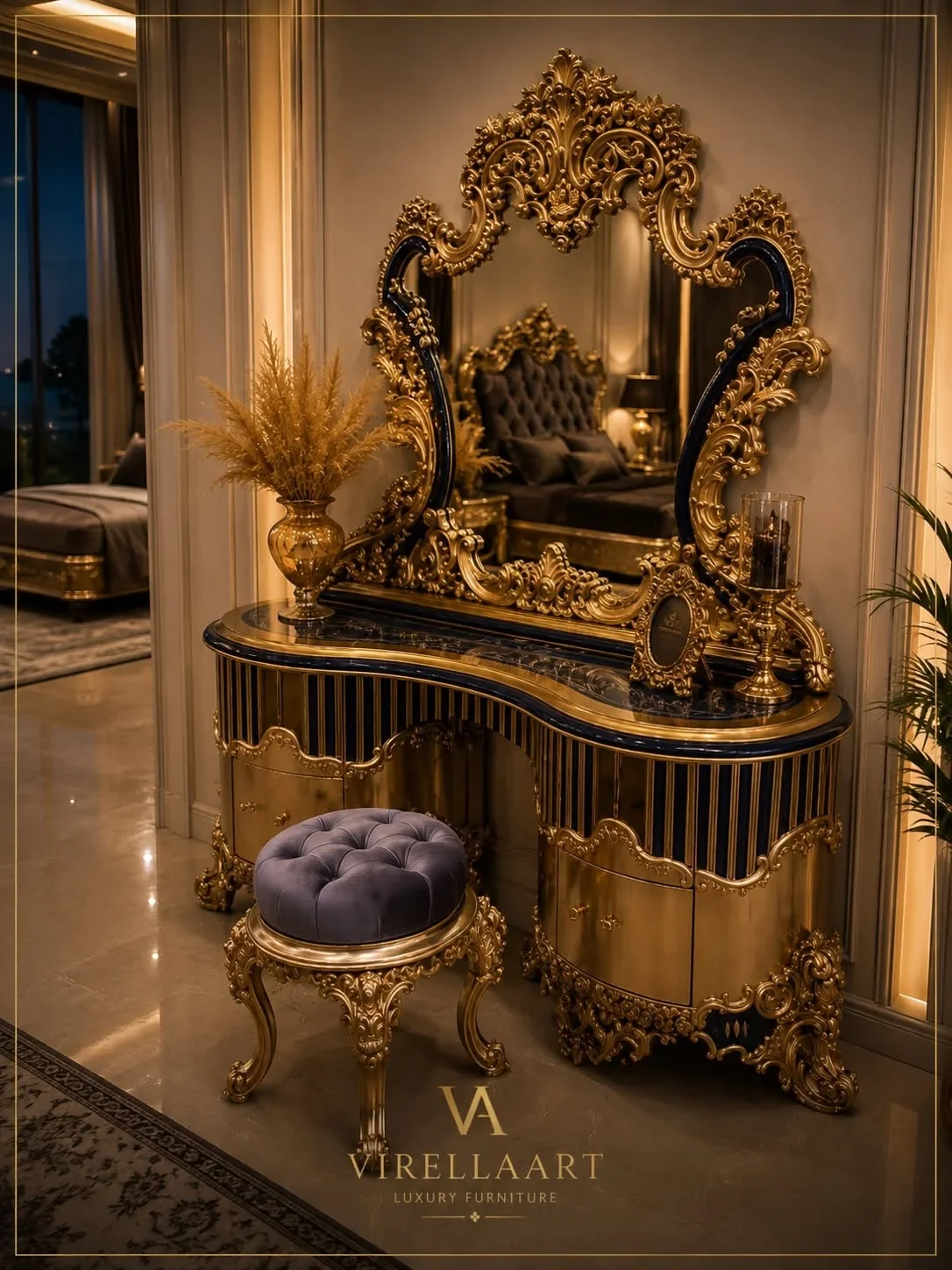
The essential decision
Choose the mirror from the complete dresser or dressing-table composition rather than the empty wall alone. Its width, height, frame and mounting position should support comfortable use while preserving visual balance.
A bedroom mirror can support dressing, reflect natural light and add depth to the room. In a luxury bedroom, it also forms an important decorative relationship with the dresser, stool, nightstands and bed.
A mirror that is too small may appear disconnected from a substantial dresser. One that is too large can dominate the wall, create uncomfortable reflections or make the furniture below appear visually narrow.
1. Measure the complete usable wall
Record the wall width and height, then mark doors, curtains, windows, switches, sockets, wall lights, mouldings and architectural panels.
Use the available furniture zone rather than the complete wall-to-wall measurement. Wardrobes, bed frames and circulation routes may reduce the usable mirror area.
Photograph the wall straight on
Take a level photograph directly opposite the proposed dresser position. Add photographs from the bed, entrance and both sides of the room.
These viewpoints reveal whether the mirror will appear centred and proportionate after the furniture is installed.
Ourcomplete room measurement guideexplains how to record walls, furniture clearances and delivery access.
2. Record the complete dresser or dressing-table size
Measure the furniture at its widest, deepest and highest external points. Include carved frames, curved sides, handles and decorative projections.
The mirror should normally relate directly to the dresser beneath it. Measure the usable top surface and confirm whether lamps, jewellery boxes or decorative accessories will remain there.
Include the stool and seating position
Where the dresser is used as a vanity, record the stool height, seat position and the user’s distance from the mirror.
The stool should move freely without blocking drawers or the principal route through the bedroom.
Ourbedroom dresser size guideexplains how to plan width, storage access and surrounding circulation.
3. Choose mirror width from the furniture below
The mirror should generally remain narrower than the dresser, leaving visible furniture width at both sides. This creates a stable and grounded composition.
A very narrow mirror can look insignificant above a broad dresser. A mirror wider than the furniture may make the arrangement appear top-heavy unless the wall architecture deliberately supports that scale.
Measure the complete outer frame
Use the widest external dimension, including carved ornament, curved edges and decorative crowns.
A richly detailed frame can feel visually larger than a simple frameless mirror of identical dimensions.
Include paired or grouped mirrors
Where two mirrors are used, calculate their combined width and the space between them as one complete arrangement.
The grouping should remain centred on the dresser and should not create uneven side margins.
4. Choose mirror height from the user and wall
Mirror height should support practical viewing while fitting comfortably between the dresser and upper wall details.
A dressing mirror may need enough height to show the user’s head, shoulders and upper body while seated. A decorative dresser mirror may prioritise composition over full-body visibility.
Check the tallest expected user
Confirm that the useful reflective area supports different users. Decorative frame elements do not add usable reflection.
Protect upper architectural clearance
Leave controlled space between the mirror and ceiling, cornice, wall panel or chandelier sightline.
A mirror positioned too close to an upper detail can make the wall appear crowded even when the measured dimensions fit.
Continue with ourluxury bedroom buying guideand explore theVIRELLAART bedroom collection.
5. Plan the correct mirror mounting height
Mounting height should be selected from the actual furniture and user position rather than from a general eye-level rule.
The lower edge should remain visually connected to the dresser while allowing enough space for accessories and cleaning.
Test the seated viewing position
Sit on the intended stool and check the useful reflective area. The mirror should not force users to bend or sit unnaturally.
Test the standing viewing position
Stand in front of the dresser and confirm the mirror remains useful without being mounted excessively high.
Evaluate the view from the entrance
The mirror should appear centred and connected with the dresser when seen from the bedroom entrance and bed.
Include the hanging system
Hooks, rails, brackets and wires affect the final position. Measure from the actual fixing point to the top and bottom of the frame before drilling.
6. Select a mirror shape for the furniture and wall
Rectangular mirrors
Rectangular mirrors reinforce the horizontal or vertical lines of a dresser and suit structured bedroom compositions.
Round mirrors
Round mirrors can soften straight furniture lines and introduce contrast above a modern or transitional dresser.
Oval mirrors
Oval mirrors combine vertical presence with curved edges and can complement classic or decorative furniture.
Ornate shaped mirrors
Sculptural frames and decorative crowns create greater visual weight. Measure the complete outline rather than the central reflective glass.
Full-length mirrors
A full-length mirror is normally planned separately from the dresser. It needs enough wall height, floor clearance and viewing distance to function properly.
7. Evaluate what the bedroom mirror will reflect
A mirror can reflect the bed, chandelier, window, curtains or architectural wall details. The reflected view becomes part of the room design.
Avoid positions that reflect visual clutter, open bathroom doors, exposed storage or uncomfortable direct lighting.
Use natural light carefully
A mirror near a window can increase brightness, but strong direct sunlight may create glare at certain hours.
Check chandelier reflections
Reflecting a chandelier can increase its decorative presence. Confirm that repeated bright lamps do not become uncomfortable from the bed.
Ourbedroom chandelier size guideexplains how to plan the ceiling focal point.
Check reflections from the bed
Sit and lie on the bed to see what appears in the mirror. A reflection that feels elegant while standing may become distracting from the sleeping position.
Check reflections during evening use
Bedside lamps and wall lights can produce multiple bright points inside a mirror. Test the room after dark as well as in daylight.
8. Coordinate the mirror with the complete bedroom
Compare the mirror with the bed, nightstands, wardrobe, dresser, curtains, rug, chandelier and wall treatments.
The mirror frame does not need to match every furniture detail, but its visual weight and design character should support the room.
Coordinate with the bed and headboard
A substantial carved bed can support a more decorative mirror. A minimal bed may benefit from a cleaner frame and quieter shape.
Ourbed size guideexplains how to establish the principal bedroom proportions.
Coordinate with the wardrobe
Mirrored wardrobe doors and a separate dresser mirror can create multiple reflective surfaces. Check whether the room becomes visually busy.
Ourwardrobe size guideexplains storage proportions and door clearances.
Coordinate with curtains
Curtain stacking can reduce usable wall width and may appear in the mirror reflection. Confirm the open and closed curtain positions.
Ourbedroom curtain size guideexplains track width and stacking space.
Coordinate with bedroom wall art
A large mirror and several strong artworks can compete for attention. Decide which wall should carry the principal focal point.
Ourbedroom wall-art size guideexplains how to plan decorative wall scale.
Coordinate with the bedroom rug
The rug anchors the furniture at floor level while the mirror adds vertical emphasis. Strong frame ornament and a highly patterned rug should remain visually balanced.
Ourbedroom rug size guideexplains how to anchor the complete sleeping arrangement.
Avoid common bedroom-mirror mistakes
Do not choose mirror size from the empty wall alone, ignore the external frame or mount the mirror before the dresser position is fixed.
Another common mistake is focusing only on decorative appearance without checking seated visibility, standing use and reflected views.
9. Test the size and prepare installation
Mark the proposed mirror outline with removable tape or create a full-size paper template. Include every decorative projection.
Evaluate the test from the stool, standing position, bed, entrance and surrounding circulation.
Confirm wall construction
Large mirrors and heavy frames require suitable fixings for the wall material. Installation should follow the mirror and fixing manufacturer’s guidance.
Check concealed services
Confirm the position of electrical cables, pipes and hidden systems before drilling.
Plan safe lifting and installation
Large mirrors may require multiple installers, protective equipment and specialist handling. Do not attempt installation without appropriate support.
Protect the dresser surface
Cover the dresser during installation and confirm the mirror can be lifted into position without striking handles, carved details or accessories.
Information to prepare
- The complete usable wall width and height
- The dresser width, height and depth
- The stool and expected user position
- The mirror’s external width and height
- The frame depth and total weight
- The required mounting height
- Wall photographs and reflected viewpoints
- The wall construction and fixing requirements
VIRELLAART supports international clients with made-to-order furniture selection, order coordination and worldwide delivery planning from Istanbul.
Final bedroom mirror size checklist
VIRELLAART guidance
Choose the mirror from the dresser and room together
The right bedroom mirror size balances practical viewing, dresser proportions, wall space and reflected views. Test the complete outline and mounting height before installation.
VIRELLAART can review room and furniture information when discussing a complete luxury bedroom arrangement and made-to-order furniture options.
Frequently asked questions
Bedroom mirror size FAQ
How wide should a bedroom mirror be above a dresser?
The mirror should usually remain narrower than the dresser while creating a clear visual relationship with it. Frame shape, dresser width and surrounding wall space affect the final proportion.
How high should a bedroom mirror be mounted?
Mounting height should support comfortable use while sitting or standing, depending on the dresser and stool arrangement. The complete composition should also feel balanced from the entrance.
Can a bedroom mirror be wider than the dresser?
It can work in some architectural compositions, but it may make the arrangement feel top-heavy. The wall architecture and complete furniture grouping must support the additional width.
Is a round or rectangular mirror better for a bedroom?
The best shape depends on the dresser, headboard, wall panels and room style. Rectangular mirrors create structure, while round or curved mirrors can soften a formal furniture arrangement.
How can I test bedroom mirror size before ordering?
Mark the proposed outer dimensions with removable tape or paper templates, then evaluate the size from the dresser stool, bed, entrance and surrounding circulation.