The essential decision
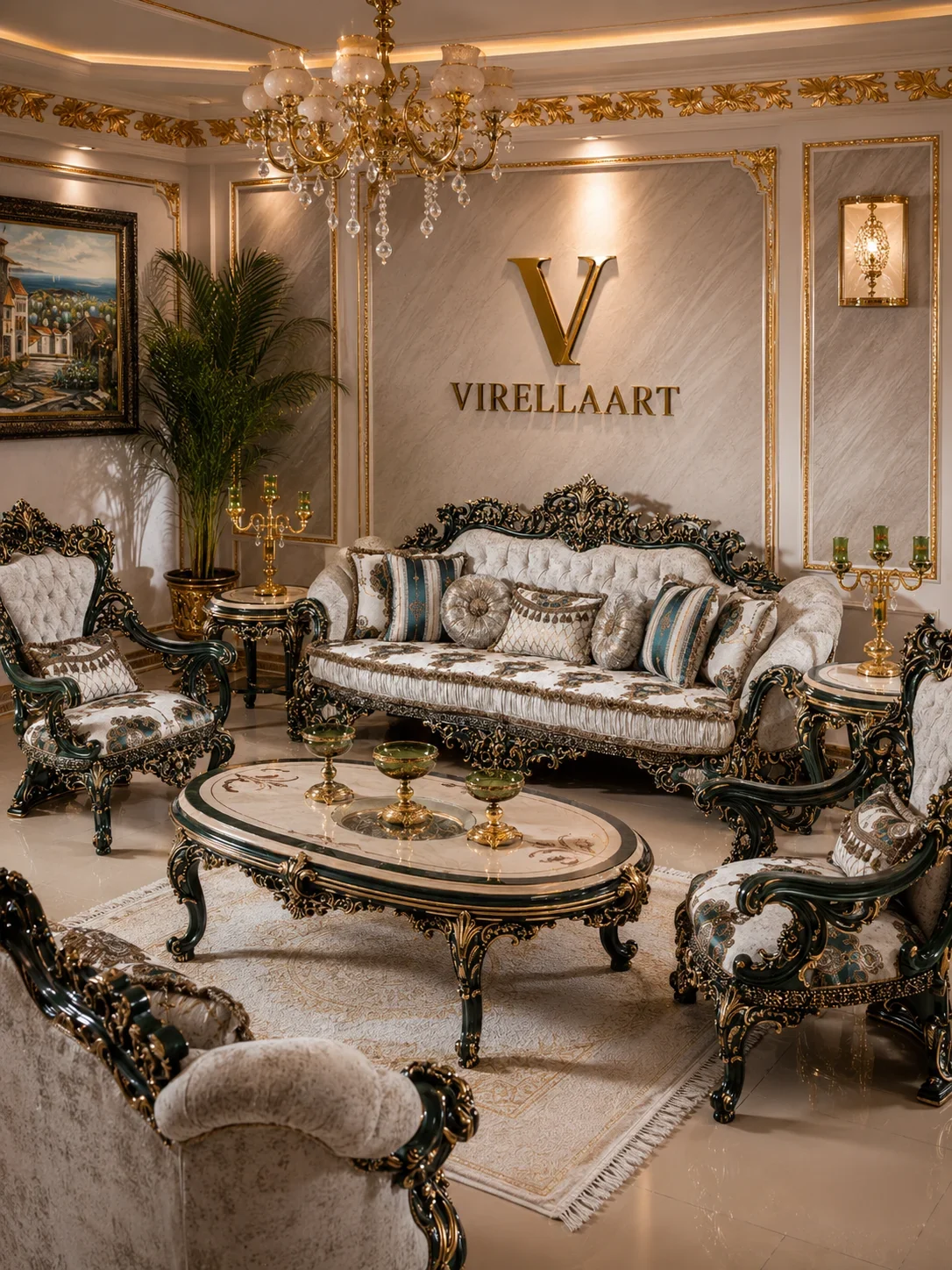
Choose wall art from the furniture composition beneath it, not from the empty wall alone. The artwork should feel connected to the sofa while preserving controlled space around frames, lighting and architectural details.
Wall art can create a focal point, reinforce colour and provide visual balance above a sofa or console. Its scale determines whether the arrangement feels intentional or disconnected.
A small artwork on a broad luxury wall may appear lost. An oversized composition can compete with the sofa, mouldings, chandelier or surrounding furniture.
1. Measure the complete usable wall
Record the wall width and height, then mark doors, windows, curtains, wall lights, switches, sockets, mouldings, columns and ventilation elements.
Measure the usable hanging area rather than the complete wall-to-wall dimension. Architectural details may divide one large wall into several smaller visual zones.
Photograph the wall straight on
Stand directly opposite the wall and take a level photograph. Additional photographs from the room entrance and sofa reveal how the composition will be seen during everyday use.
Ourcomplete room measurement guideexplains how to document walls, furniture and architectural clearances.
2. Record the complete sofa or furniture width
Measure the sofa at its widest external points, including broad arms, carved frames and decorative projections.
Wall art positioned above two sofas, a sectional or a sofa with side tables should relate to the complete furniture arrangement, not one isolated seat.
Confirm the final sofa position
Artwork should be planned after the sofa location is fixed. Moving the sofa later can make a previously centred composition appear visibly misaligned.
Oursofa size guideexplains how to calculate the full seating footprint and wall clearance.
3. Choose artwork width from the furniture below
The artwork should create a clear horizontal relationship with the sofa while leaving visible space at both sides.
A piece that is only slightly narrower than a broad wall but much wider than the sofa may feel connected to the architecture while becoming disconnected from the seating.
Use the complete external frame width
Measure from the outer edge of the frame, not the visible image alone. Deep, carved or layered frames can add substantial width.
Include several pieces as one composition
For diptychs, triptychs and gallery walls, calculate the complete outer width including every gap between frames.
The empty spaces inside the group are part of the design and should be measured consistently.
4. Choose artwork height from the available wall
Artwork height should respond to the space between the sofa and ceiling, moulding, chandelier or wall lighting.
A very wide but shallow piece may suit a long sofa beneath a low ceiling. A taller artwork can create stronger vertical emphasis where the wall has greater height.
Include the headroom above the artwork
Leave controlled space between the top of the frame and the ceiling or moulding. Artwork positioned too close to an upper architectural detail can appear crowded.
Coordinate width and height together
Do not choose width first and accept any available height. The complete aspect ratio should support both the sofa and wall proportions.
Explore theVIRELLAART living room collectionand read ourluxury sofa buying guide.
5. Plan the correct hanging height
Artwork above a sofa should feel connected to the furniture rather than floating near the ceiling. The lower frame edge and sofa back should form one balanced composition.
Hanging height should also protect the artwork from users sitting down, standing up or resting against the sofa.
Evaluate from seated eye level
Sit on every sofa and armchair. Confirm that the artwork remains comfortable to view and does not feel excessively high.
Evaluate from the entrance
View the arrangement from the main doorway and adjoining rooms. Artwork that feels balanced from the sofa may appear too low or high from a distant viewpoint.
Include the hanging hardware
Wires, hooks, rails and brackets determine the final position. Measure the distance between the hardware and the top of the frame before drilling.
6. Choose one large artwork or a grouped arrangement
One large statement piece
A single large artwork creates a clear focal point and can make a broad wall feel composed with fewer visual interruptions.
The frame, image and surrounding wall should be evaluated as one complete block.
Diptych or triptych
Two or three coordinated pieces can follow the horizontal width of a sofa while adding rhythm. Frame size and spacing should remain consistent.
Gallery-wall arrangement
A gallery wall combines several artworks, photographs or objects. Plan the complete group on the floor or with paper templates before installation.
Treat the outer boundary of the gallery as one large artwork when comparing it with the sofa.
Sculptural wall panels
Decorative panels, reliefs and metal compositions may project farther from the wall than framed art. Include depth as well as width and height.
7. Coordinate artwork with architectural wall details
Mouldings, wall panels, niches, mirrors and integrated lighting divide the wall into visual sections. Artwork should respect these boundaries.
Wall mouldings and framed panels
Artwork inside a decorative panel should leave balanced space on every side. Measure the internal panel rather than the complete wall.
Wall lights
Sconces beside artwork should have enough clearance from the frame and should not cast distracting glare across the surface.
Mirrors
A mirror can function as wall art while adding reflected light and visual depth. Its reflections should be evaluated from every seating position.
Curtains and windows
Curtain stacking can reduce the usable wall width near a window. Artwork should not interfere with moving fabric or appear crowded beside full-height curtains.
Ourliving room curtain size guideexplains how to plan track width and stacking space.
8. Evaluate colour, frame and visual weight
Two artworks with identical dimensions can feel different. Strong contrast, dark colour and heavy frames increase visual weight.
Light backgrounds, open compositions and narrow frames may appear less dominant even at a large size.
Coordinate with sofa upholstery
Artwork can repeat colours from the sofa, cushions, curtains or rug without matching every tone exactly.
Oursofa upholstery guideexplains how colour and texture influence the complete seating composition.
Coordinate with the rug
The rug anchors the room horizontally while artwork defines the wall above the sofa. Pattern and colour should be balanced across these two large visual areas.
Ourliving room rug size guideexplains how to connect the seating furniture.
Coordinate with the chandelier
A highly decorative chandelier and strongly detailed artwork can compete for attention. Decide which element should be the principal focal point.
Ourliving room chandelier guideexplains how to balance the ceiling focal point with the furniture below.
Use lighting carefully
Picture lights, ceiling spots and wall washers can increase the visual importance of artwork. Confirm beam angle, glare and reflections before installation.
Avoid common wall-art mistakes
Do not choose artwork from the empty wall alone, ignore frame dimensions or hang the centre of every piece at one fixed height without considering the sofa.
Another common mistake is treating several pieces individually instead of calculating their complete grouped dimensions.
9. Test the dimensions and prepare installation
Create full-size paper templates or mark the proposed outer dimensions with removable tape. Include the spaces between pieces in a grouped arrangement.
View the test composition from the entrance, sofas, armchairs and adjoining rooms before drilling.
Confirm wall construction
Heavy frames, mirrors and sculptural wall art require suitable fixings for the wall material. Installation should follow the artwork and fixing manufacturer’s instructions.
Check hidden services
Confirm the location of electrical cables, pipes and concealed systems before drilling into the wall.
Information to prepare
- The complete usable wall width and height
- The sofa or furniture width beneath the artwork
- The proposed outer artwork dimensions
- The frame depth and weight
- The distance above the sofa
- Wall lights, mouldings and curtain positions
- Wall photographs from several viewpoints
- The wall construction and fixing requirements
VIRELLAART supports international clients with made-to-order furniture selection, order coordination and worldwide delivery planning from Istanbul.
Final living room wall-art checklist
VIRELLAART guidance
Choose wall art from the complete furniture composition
The right living-room wall-art size balances sofa width, wall height, hanging position and visual weight. Test the complete outline before installation rather than selecting from the empty wall alone.
VIRELLAART can review room and furniture information when discussing a complete luxury living-room arrangement and made-to-order furniture options.
Frequently asked questions
Living room wall-art size FAQ
How large should wall art be above a sofa?
Wall art should create a clear relationship with the sofa width without appearing disconnected or extending awkwardly beyond the furniture. The correct size also depends on frame shape, wall height and visual weight.
How high should wall art hang above a sofa?
The artwork should feel connected to the sofa while preserving enough space above the backrest. Hanging height should be evaluated from seated and standing viewpoints.
Is one large artwork better than several smaller pieces?
Both can work. One large piece creates a strong focal point, while a coordinated gallery arrangement can fill a broader wall. The complete outer dimensions of a group should be treated as one composition.
Should wall art be centred on the sofa or the wall?
The sofa or complete seating arrangement is usually the stronger reference. Centring artwork on an empty wall can make it appear misaligned with the furniture.
How can I test wall art size before buying?
Mark the proposed outer dimensions with removable tape or create paper templates, then evaluate the composition from the entrance, sofas and surrounding circulation areas.