The essential decision
Measure curtains from the final installed track or rod rather than the window glass alone. Length, total width, fullness and stacking space should be planned together before fabric is cut.
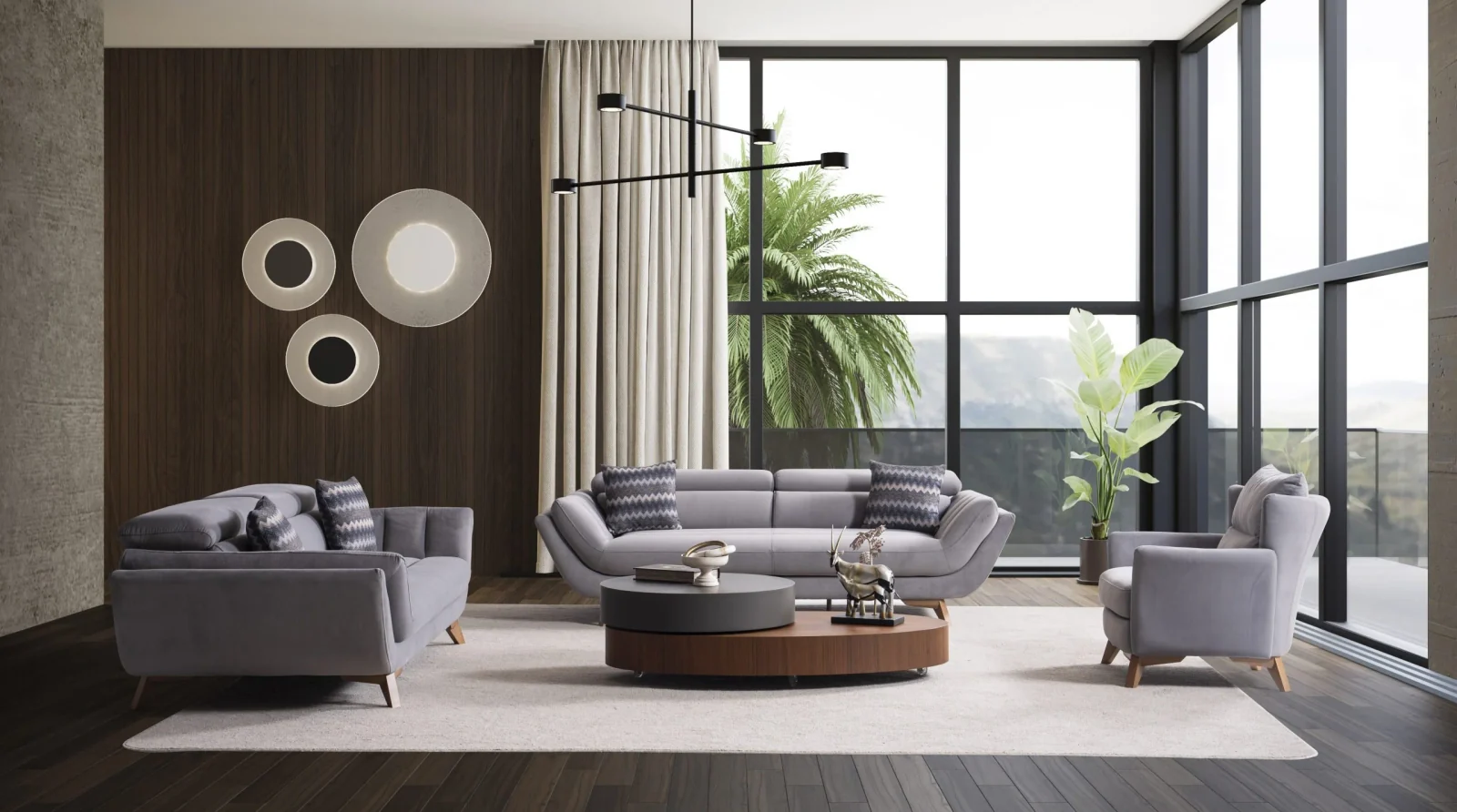
Curtains influence much more than privacy. Their dimensions can make a living room feel taller, frame the architecture and control how natural light enters the seating area.
Incorrect measurements can leave gaps at the sides, create insufficient fullness or cause fabric to drag unevenly across the floor. Accurate planning should begin after the finished ceiling, floor and window details are confirmed.
1. Measure the complete window or glazed opening
Record the total width and height of the window, door or glazed wall. Measure the visible opening as well as the surrounding wall area available for the track and stacked curtains.
Large living-room windows may include fixed panels, opening sections or balcony doors. Each moving element must remain fully accessible after the curtains are installed.
Measure at several points
Walls, floors and ceilings may not be perfectly level. Measure the height on the left, centre and right, then record every result.
Measure the width at the top, middle and lower sections where architectural details may project into the curtain path.
Ourcomplete room measurement guideexplains how to document architectural details and furniture clearances.
2. Choose the final curtain track or rod position
The track position determines both curtain length and the amount of wall the fabric can cover. It must be fixed before final production measurements are taken.
Ceiling-mounted tracks
A ceiling-mounted track can create a continuous floor-to-ceiling effect and visually increase room height. Confirm that the ceiling structure supports the system.
Wall-mounted rods or tracks
Wall mounting requires a clear and level area above the opening. Decorative brackets and finials increase the complete external width.
Recessed curtain channels
Concealed tracks require accurate coordination with the ceiling. The recess must provide enough depth for gliders, headings, lining and multiple curtain layers.
Measure from the actual running position of the curtain hooks, not only from the visible face of the track.
3. Choose the final curtain length
Curtain length is measured from the selected attachment point to the intended lower finish. The finished floor surface must be complete before the final measurement.
Floating above the floor
Curtains can finish slightly above the floor to reduce contact, simplify cleaning and support smooth daily operation.
The gap should remain controlled and consistent. An excessive gap can make full-height curtains appear too short.
Precisely touching the floor
A precise floor touch creates a tailored appearance. It requires accurate measurements and allowance for fabric behaviour, heading construction and installation tolerances.
Controlled curtain pooling
Additional length can create a decorative pool on the floor. This approach increases visual softness but requires more maintenance and may not suit frequently operated curtains.
Different floor heights
Rugs, thresholds and changes in floor level can affect the lower finish. Do not measure from a temporary protective covering or unfinished subfloor.
Explore theVIRELLAART living room collectionand read ourluxury sofa buying guide.
4. Calculate curtain width from the complete track
Curtain width should normally be calculated from the complete working track or rod length, not only the window width.
The track may extend beyond the opening so curtains can stack away from the glass and allow more daylight into the room.
Measure between functional end points
For tracks, measure the full usable glider path. For rods, confirm whether the curtain stops at the brackets or extends toward decorative finials.
Include return sections
Some curtain systems return toward the wall at each side. These returns reduce light gaps and conceal the outer edge of the curtain construction.
Add return dimensions to the production width where the selected system requires them.
5. Plan suitable fabric fullness
Fullness is the relationship between the flat fabric width and the installed track width. It creates folds and determines how rich or minimal the curtains appear.
The correct fullness depends on the fabric weight, heading style, lining and desired visual density. A fixed rule should not be applied to every textile.
Light and sheer fabrics
Sheer fabrics may need greater fullness to create privacy and softly filter daylight. Low fullness can make the panels appear flat and sparse.
Heavy decorative fabrics
Thick velvet or lined textiles create greater volume with less fabric than light sheers. Excessive fullness may make them difficult to stack and operate.
Heading styles affect width
Wave, pinch pleat, pencil pleat and other headings create different fold structures. Confirm the heading before approving production dimensions.
Multiple curtain layers
Sheers and decorative drapes often use separate tracks. Each layer requires its own width calculation, fullness and stacking allowance.
6. Allow enough space for curtain stacking
Stacking space is the wall area occupied when curtains are fully open. Insufficient space can leave fabric covering part of the glass.
The required stack depends on total fabric width, thickness, heading style, lining and the number of curtain layers.
Plan stack-back beyond the opening
Extending the track beyond the window can allow the curtains to stack against the wall instead of blocking daylight.
Check whether switches, wall lights, artwork or air-conditioning elements occupy this area.
Protect balcony and terrace access
Curtains beside sliding or hinged doors should open far enough for comfortable access. Fabric should not become trapped in door hardware.
Consider motorised curtain systems
Motorised systems require space for the motor, power supply and control components. Confirm these requirements before the track recess is constructed.
7. Protect clearance around sofas and tables
Curtains need room to hang freely. Sofas, side tables and floor lamps placed too close to the window can push the fabric out of alignment.
Measure the deepest part of the folds and confirm that the furniture does not compress them in either the open or closed position.
Allow space behind the sofa
A sofa positioned in front of curtains should leave enough depth for the textile to move without rubbing against upholstery.
Oursofa size guideexplains how to plan the complete seating footprint and wall clearance.
Check side tables and floor lamps
Furniture near curtain edges can interrupt stacking and make panels hang unevenly. Confirm their final positions before the track length is fixed.
Ourside table size guideexplains how to coordinate supporting furniture with the sofa.
Check radiators and heating elements
Curtains should not obstruct heating equipment or create unsafe contact with hot surfaces. Installation must follow applicable product and safety guidance.
8. Evaluate fabric weight, lining and light control
Fabric behaviour influences the finished dimensions. Natural fibres, heavy textiles and lined curtains may relax or change slightly after installation.
Ask the curtain manufacturer how the selected fabric is prepared and whether allowances are required for its construction.
Sheer curtains
Sheers filter daylight and provide daytime softness. Their width and fullness affect privacy and the visibility of the window frame.
Decorative drapes
Decorative curtains add colour, texture and stronger visual framing. They may be fully functional or remain primarily at the sides.
Blackout and privacy lining
Lining adds volume, weight and light control. It can affect the stack-back dimension and the way folds hang.
Coordinate with the rug and upholstery
Compare curtain samples with sofa upholstery, cushions, rugs, flooring and wall finishes under both daylight and artificial light.
Oursofa upholstery guideexplains how colour, texture and practical use affect fabric selection.
Coordinate with the chandelier
Full-height curtains and a chandelier both influence the vertical scale of the room. Their proportions should support the same architectural composition.
Ourliving room chandelier size guideexplains how to plan the ceiling focal point.
Avoid common curtain-measuring mistakes
Do not measure only the glass, order before the track position is fixed or calculate fabric width without the selected heading and fullness.
Another common mistake is measuring curtain length before the finished floor, ceiling and installation hardware are complete.
9. Prepare final measurements and ordering information
Record every measurement in millimetres or centimetres using one consistent unit. Label each window separately, even when openings appear identical.
Photograph the complete wall, ceiling, floor, track area, furniture positions and any obstructions beside the window.
Information to prepare
- The complete opening width and height
- The final track or rod position
- The usable track width
- The selected lower curtain finish
- The fabric and heading style
- The required fullness and lining
- The available stacking space
- Nearby sofa, table and radiator positions
VIRELLAART supports international clients with made-to-order furniture selection, order coordination and worldwide delivery planning from Istanbul.
Final living room curtain checklist
VIRELLAART guidance
Measure curtains from the complete installed system
The right living-room curtain dimensions balance floor clearance, fabric fullness, window coverage and stacking space. Confirm the final track, floor and furniture positions before approving production.
VIRELLAART can review room and furniture information when discussing a complete luxury living-room arrangement and made-to-order furniture options.
Frequently asked questions
Living room curtain size FAQ
How long should living room curtains be?
Curtain length should be measured from the final track or rod position to the intended floor finish. The correct result depends on whether the fabric floats above, touches or pools on the floor.
How wide should curtains be compared with the window?
Curtains need additional width beyond the opening to create suitable fullness and allow the panels to stack away from the glass. The exact amount depends on fabric, heading and design.
Should curtains reach from ceiling to floor?
Ceiling-to-floor curtains can increase visual height and suit many luxury living rooms, but track position, ceiling details, radiators and furniture clearance must be checked first.
Should living room curtains touch the floor?
They may float slightly above the floor, touch it precisely or create a controlled pool. The preferred finish should be chosen before production and measured from the completed floor.
How can I avoid ordering curtains that are too narrow?
Measure the complete track or rod width rather than the glass alone, include stacking space and apply the fullness required by the selected fabric and heading style.