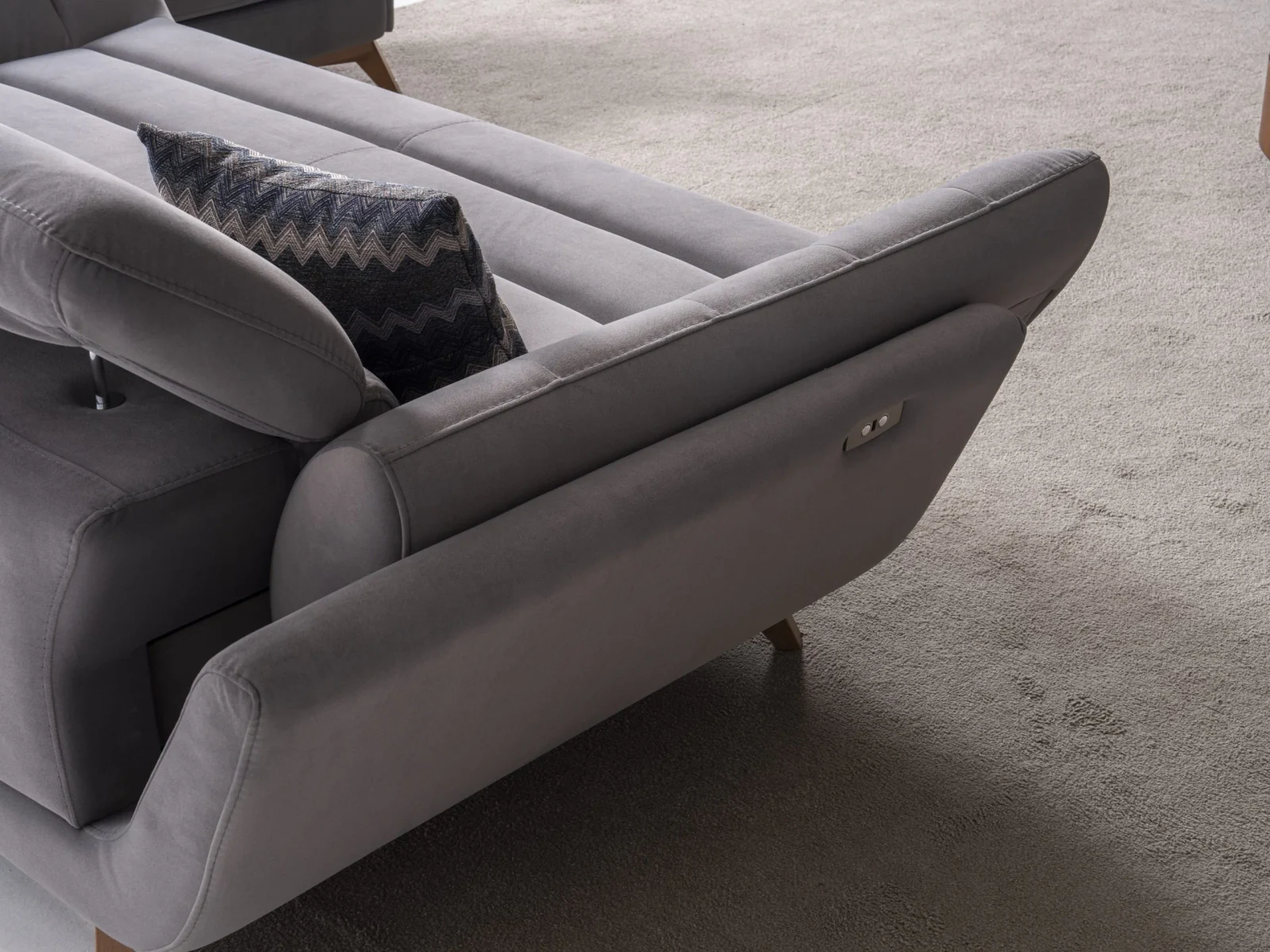
The essential decision
Choose the rug from the complete seating arrangement rather than the coffee table alone. The correct size should connect the sofas and armchairs while preserving circulation and a balanced area of visible flooring.
A living room rug defines the visual boundary of the seating area. When it is correctly proportioned, sofas, armchairs and the coffee table feel connected as one composition.
A rug that is too small can make substantial furniture appear disconnected. A rug that is too large may cover nearly the entire room and reduce the intended relationship with flooring, walls and surrounding architecture.
1. Measure the complete living room
Record the room width and length, then mark doors, windows, fireplaces, television furniture, columns and the main walking routes.
Measure the usable floor area rather than calculating only from wall to wall. Architectural projections and permanent furniture may reduce the area available for the rug.
Create an accurate floor plan
Draw the room from above and position every sofa, armchair, coffee table and side table. Include the complete external furniture dimensions.
Ourcomplete room measurement guideexplains how to document walls, circulation and furniture clearances.
2. Record the complete sofa and armchair layout
The rug should support the furniture arrangement rather than an empty centre of the room. Measure the complete width and depth of every sofa and armchair.
Include broad arms, curved sides, chaise modules and decorative projections. These details influence the visual boundary that the rug needs to support.
Straight sofa arrangements
A single sofa with facing armchairs may require a rug that connects the front of every seat while preserving open circulation at the sides.
Two-sofa arrangements
Facing or perpendicular sofas create a wider composition. The rug should relate to both furniture pieces instead of aligning only with the principal sofa.
Corner and sectional sofas
L-shaped seating creates a defined internal area, but the rug should not appear trapped inside the corner. Compare the rug width with the complete sectional footprint.
Oursofa size planning guideexplains how to calculate the complete seating footprint.
3. Choose a rug width that connects the seating
Rug width should normally relate to the widest part of the main seating arrangement. It should not appear noticeably narrower than the central furniture composition.
In many layouts, extending the rug beyond the sofa or seating group creates a stronger visual foundation. The exact extension depends on the room and furniture proportions.
Measure from the furniture, not the wall
The nearest wall does not determine rug width by itself. Begin with the sofa and armchair arrangement, then evaluate the visible floor around it.
A rug can remain centred beneath the furniture even when the room architecture is slightly asymmetrical.
4. Choose rug length from the complete seating depth
Rug length should support the distance from the main sofa toward the facing chairs or opposite sofa. Include the coffee table and practical access around it.
A rug that ends immediately after the coffee table may appear too small. The composition should visually reach toward the seating on every active side.
Protect surrounding circulation
Leave enough visible flooring where doors, balconies or adjoining rooms create important walking routes.
Avoid placing a rug edge directly within a heavily used route when the placement creates an uncomfortable transition or potential movement of the rug.
Explore theVIRELLAART living room collectionand read ourcomplete luxury sofa buying guide.
5. Select the correct furniture placement on the rug
All furniture legs on the rug
A large rug can support all sofa and armchair legs. This creates a unified composition and often suits generous living rooms.
The rug must extend far enough behind and beside the furniture so that rear legs do not sit close to the edge.
Front furniture legs on the rug
Placing the front legs of sofas and armchairs on the rug can connect the furniture while preserving more visible flooring.
The placement should remain consistent. A rug barely touching one sofa while extending deeply under another can feel accidental.
Furniture completely outside the rug
A smaller rug positioned only beneath the coffee table may work in limited situations, but it can easily appear disconnected from substantial luxury seating.
Test this arrangement carefully and ensure the rug still has enough visual scale to define the centre of the room.
6. Match the rug shape to the furniture arrangement
Rectangular rugs
Rectangular rugs suit many straight sofa, two-sofa and sectional arrangements. Their long axis can reinforce the primary direction of the room.
Square rugs
Square rugs may suit balanced conversation areas or symmetrical corner layouts. They require enough width and length to avoid appearing compressed beneath the furniture.
Round rugs
Round rugs can soften compact seating arrangements and curved furniture. Their diameter must be evaluated against every surrounding seat.
Organic and custom-shaped rugs
Irregular forms can create a sculptural focal point, but their widest and narrowest dimensions should be tested with the complete furniture layout.
7. Coordinate the rug with the coffee table
The coffee table should sit comfortably within the rug composition. Its complete footprint, including grouped or nested pieces, must remain inside the visually active centre.
A large coffee table on a small rug can make the rug appear like an accessory beneath the table rather than the foundation of the seating area.
Include table movement and access
Nested or mobile tables may be separated during use. Confirm that their expanded arrangement remains supported by the rug and does not create unstable furniture positions.
Ourcoffee table size guideexplains how to plan the complete central furniture footprint.
Coordinate side tables
Side tables may sit fully on the rug, partially on it or outside it depending on the seating arrangement. Avoid unstable positions where table legs rest on different levels.
Ourside table size guideexplains how to coordinate supporting surfaces with the sofa.
8. Evaluate colour, pattern, pile and visual weight
Two rugs with identical dimensions can feel different depending on colour and pattern. Dark or strongly patterned designs often appear visually heavier than lighter, quieter surfaces.
Compare the rug with sofa upholstery, coffee tables, curtains, flooring, wall finishes and the television unit.
Choose an appropriate pile height
Pile height affects furniture stability, cleaning and the movement of table legs. Thick surfaces may create a softer appearance but require practical maintenance planning.
Confirm that coffee tables and side tables stand securely. Fine legs or moving mechanisms may require a more stable surface.
Test physical samples where possible
Screen colours can vary from the final textile. Physical samples help evaluate colour, texture and the relationship with existing furniture and flooring.
Avoid common rug-sizing mistakes
Do not choose the rug from coffee-table dimensions alone, ignore armchairs or measure the empty floor before the sofa arrangement is confirmed.
Another common mistake is selecting a rug that reaches each furniture piece by only a few centimetres. The composition should feel deliberate rather than narrowly fitted.
9. Prepare accurate information before ordering
Mark the proposed rug dimensions on the floor with removable masking tape. Position or mark every sofa, armchair, coffee table and side table.
Photograph the arrangement from the room entrance and opposite corners. These views reveal whether the rug connects the seating and maintains a balanced area of visible flooring.
Provide the room measurements, furniture dimensions, preferred placement, shape, colour direction and destination when discussing the complete living-room project.
VIRELLAART supports international clients with made-to-order furniture selection, order coordination and worldwide delivery planning from Istanbul.
Information to prepare
- The complete room width and length
- The sofa and armchair dimensions
- The coffee-table and side-table footprint
- The preferred furniture-on-rug placement
- The required rug shape
- The flooring, upholstery and curtain colours
- Room photographs from multiple viewpoints
- The destination city and country
Final living room rug size checklist
VIRELLAART guidance
Choose the rug from the complete seating composition
The right rug size connects sofas, armchairs and the coffee table while preserving circulation and a balanced relationship with the flooring.
VIRELLAART can review room and furniture information when discussing a complete luxury living-room arrangement and made-to-order furniture options.
Frequently asked questions
Living room rug size FAQ
How large should a living room rug be?
The rug should create a clear relationship with the complete seating arrangement. Its correct size depends on sofa dimensions, chair positions, coffee table size and the room’s circulation.
Should all sofa legs sit on the rug?
A large rug may support all furniture legs, while another layout may place only the front legs on the rug. The correct method depends on the room scale and furniture arrangement.
Can a living room rug be smaller than the coffee table area?
A rug that is only slightly larger than the coffee table often appears disconnected from the seating. The rug should normally help unify the wider sofa and armchair composition.
How can I test a rug size before ordering?
Mark the complete rug dimensions on the floor with removable masking tape, then place or mark the sofas, armchairs and coffee table to evaluate proportion and circulation.
Should the rug follow the room shape or sofa layout?
The furniture arrangement is usually the stronger guide. The selected rug should support the seating composition while remaining compatible with the surrounding room architecture.