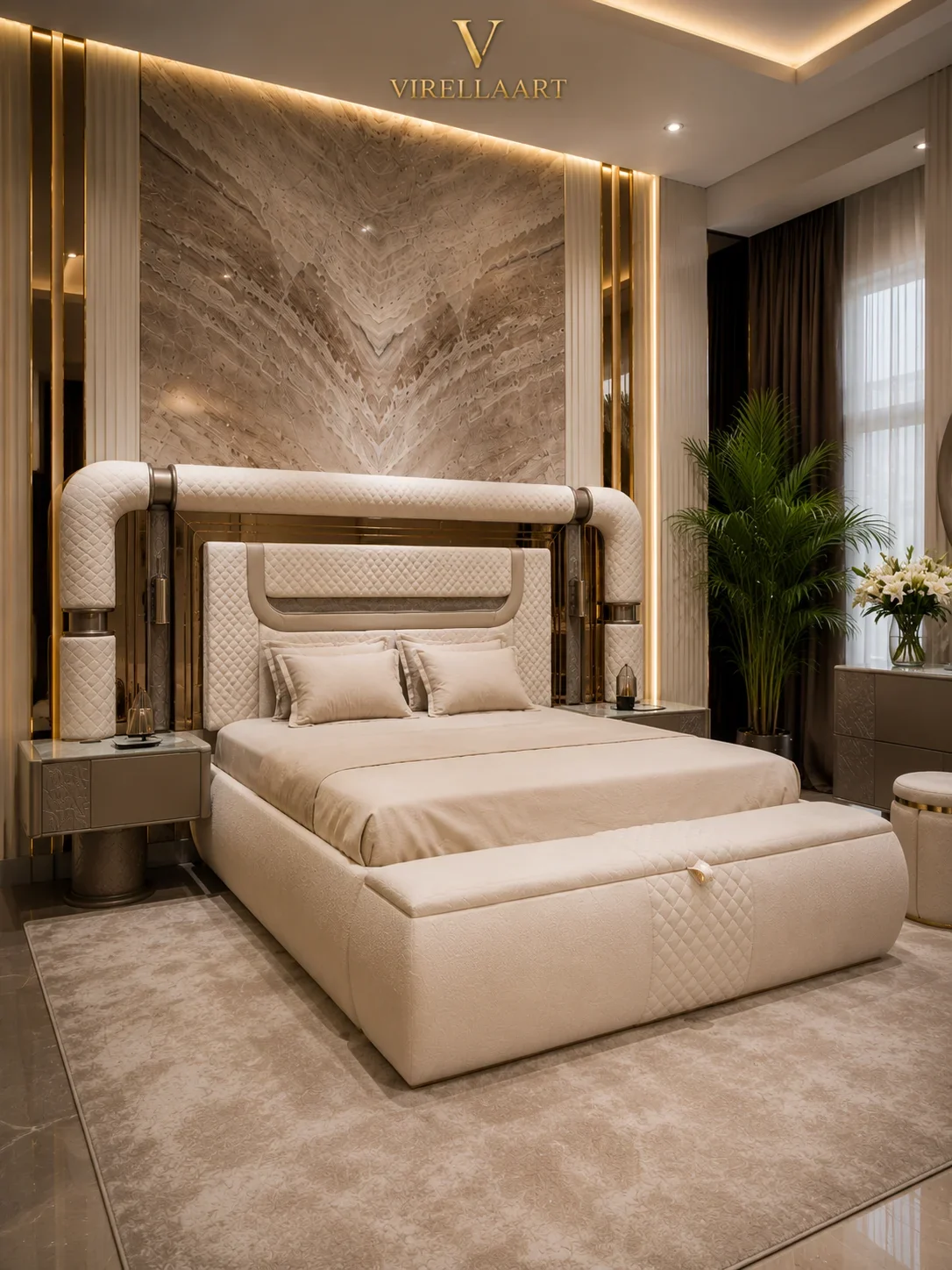
The essential decision
Choose the rug from the complete external bed dimensions and the areas where users step onto the floor. The correct size should visually anchor the bed while preserving nightstand stability, door movement and bedroom circulation.
A bedroom rug adds softness, visual structure and a comfortable transition from the bed to the floor. When correctly sized, it connects the bed, nightstands and supporting furniture as one balanced composition.
A rug that is too small may disappear beneath a substantial bed or expose narrow strips at the sides. A rug that is too large can cover nearly the entire floor and interfere with wardrobes, dressers, doors or architectural details.
1. Measure the complete bedroom
Record the room width and length, then mark doors, windows, wardrobes, dressers, radiators, columns, curtains and principal walking routes.
Measure the usable floor area rather than relying only on wall-to-wall dimensions. Permanent furniture and architectural projections may reduce the area available for the rug.
Create a complete floor plan
Draw the bed, nightstands, bench, wardrobe and dresser from above. Include the widest external dimensions of each piece.
Ourcomplete room measurement guideexplains how to document furniture clearance, door movement and delivery access.
2. Record the complete bed dimensions
Measure the external width and length of the bed frame rather than using the mattress size alone. Upholstered sides, decorative frames and extended headboards can increase the complete footprint.
Include the headboard and footboard where they project beyond the mattress. These elements influence rug placement and the visible borders around the furniture.
Confirm the final bed position
The rug should be planned after the bed position is confirmed. Moving the bed even a small distance can change the visible rug area and the relationship with the nightstands.
Ourbed size planning guideexplains how to calculate the complete sleeping and circulation footprint.
3. Choose rug width from the bed and bedside areas
Rug width should extend beyond both sides of the bed enough to create a comfortable landing area. The visible extension should feel deliberate rather than narrowly fitted.
A wide luxury bed generally requires a broader rug than a compact bed. The correct relationship depends on the bed frame, nightstands and the amount of visible flooring.
Measure from the external bed frame
Begin from the widest part of the bed, not the mattress. Curved sides, decorative rails and upholstery can change the required rug width.
Mark the proposed rug edges with masking tape and stand beside the bed. Confirm that both feet land comfortably on the textile when users rise.
4. Choose rug length from the headboard and foot area
Rug length depends on whether the textile begins beneath the headboard, in front of the nightstands or farther down the bed. It should extend beyond the foot enough to complete the composition.
A rug ending directly at the footboard can appear too small. Additional visible length creates a stronger visual foundation and supports a bench where one is included.
Protect the route at the foot of the bed
Compare the rug extension with the wardrobe, dresser, bedroom door and main walking route. Avoid creating a narrow or awkward strip of flooring between the rug and nearby furniture.
The rug edge should not interfere with a door swing or create an unstable transition in a frequently used route.
Continue with ourluxury bedroom buying guideand explore theVIRELLAART bedroom collection.
5. Select the correct rug placement under the bed
Full bed and nightstands on the rug
A large rug can extend beneath the complete bed and nightstands. This creates a unified composition and may suit generous bedrooms with substantial furniture.
The rug should extend evenly beyond the furniture and remain large enough that nightstand legs do not sit close to an edge.
Rug beginning in front of the nightstands
Placing the rug beneath the lower portion of the bed can preserve bare flooring beneath the nightstands while providing softness along the sides and foot.
The starting line should remain hidden or visually intentional. A rug beginning too far down the bed may appear disconnected from the headboard composition.
Rug beneath the lower two-thirds of the bed
This arrangement can work where room dimensions or rug availability do not support the complete bed. The rug should still extend sufficiently beyond both sides and the foot.
Separate runners beside the bed
Paired runners can provide a soft landing area without placing a large rug beneath heavy furniture. Their width, length and alignment should remain symmetrical where the bedroom layout is symmetrical.
A third runner may be used at the foot of the bed, but the three textiles should feel coordinated rather than fragmented.
6. Plan rug placement around nightstands
Nightstands should remain stable. Avoid arrangements where some legs rest on the rug while others stand on bare flooring unless the furniture design supports that position securely.
If the rug stops before the nightstands, maintain a clear and balanced line. Both bedside tables should relate consistently to the rug where the room is symmetrical.
Include drawer and door movement
Rug placement should not obstruct nightstand drawers or cabinet doors. Thick edges and high pile can interfere with low-opening furniture.
Ournightstand size guideexplains how to coordinate bedside furniture with the mattress and room circulation.
7. Include the bench or seating at the foot of the bed
A bedroom bench should be included in the complete rug footprint. Its legs must stand securely and should not sit close to the textile edge.
Measure the bench width, depth and distance from the footboard. Add the space needed for users to walk around or sit comfortably.
Test the complete foot-of-bed composition
Mark the bench and rug with masking tape. Walk between the bench and nearby wardrobe, dresser or wall to confirm the route remains practical.
Where no bench is used, the rug extension can create an open visual foreground and emphasize the bed as the principal focal point.
8. Evaluate rug material, pile and maintenance
Bedroom rugs usually experience less food and chair movement than dining rugs, allowing a broader range of textures. Comfort, cleaning, allergies and everyday use should still guide the selection.
A soft or deeper pile can create a luxurious feel beside the bed, but it may require more maintenance and can affect furniture stability.
Consider wardrobe and dresser doors
Thick rugs should not interfere with low wardrobe doors, dresser drawers or bedroom doors. Measure the available clearance above the floor.
Ourwardrobe size guideexplains how to plan door movement and bedroom circulation.
Coordinate colour and pattern
Compare the rug with bed upholstery, nightstands, wardrobe, dresser, curtains, flooring and wall treatments. The rug can create contrast or quietly connect existing tones.
Strong patterns add visual weight and may compete with detailed bedroom furniture. Quieter designs can support decorative beds without reducing their prominence.
Test samples under bedroom lighting
Natural daylight, bedside lamps and chandeliers can change the appearance of colour and texture. View physical samples at different times where possible.
Use a compatible rug pad
A suitable rug pad can improve stability and protect the floor. Its dimensions should remain within the rug perimeter and suit both the textile and flooring material.
Avoid common bedroom-rug mistakes
Do not select the rug from mattress dimensions alone, ignore the external bed frame or forget the bench and nightstands.
Another common mistake is choosing a rug that extends only a small distance beyond the bed, creating narrow visible strips that appear accidental.
9. Test and prepare the final arrangement
Mark the complete rug outline with removable masking tape. Place or mark the bed, nightstands, bench and nearby furniture.
Walk around both sides of the bed, open drawers and doors, sit on the bench and test the principal route through the bedroom.
Photograph the proposed layout from the entrance and opposite corners. These viewpoints reveal whether the rug feels proportionate to the complete room.
Provide the room, bed and furniture dimensions, preferred rug placement, colour direction and destination when discussing the full bedroom project.
VIRELLAART supports international clients with made-to-order furniture selection, order coordination and worldwide delivery planning from Istanbul.
Information to prepare
- The complete bedroom width and length
- The external bed and headboard dimensions
- The nightstand width and position
- The bench dimensions where applicable
- The preferred rug-under-bed placement
- Wardrobe, dresser and door clearances
- Room photographs from multiple viewpoints
- The destination city and country
Final bedroom rug size checklist
VIRELLAART guidance
Choose the rug from the complete bed composition
The right bedroom rug size anchors the bed, creates a comfortable landing area and preserves a balanced relationship with the nightstands, bench and surrounding floor.
VIRELLAART can review room and furniture information when discussing a complete luxury bedroom arrangement and made-to-order furniture options.
Frequently asked questions
Bedroom rug size FAQ
How large should a rug be under a bed?
The rug should create a clear visual relationship with the complete bed while extending into the areas where users step onto the floor. The correct dimensions depend on bed width, length, nightstands and room circulation.
Should a bedroom rug go under the nightstands?
A large rug may extend beneath the nightstands, while another layout may begin in front of them. The placement should keep furniture stable and create balanced visible borders.
Can I use runners beside the bed instead of one large rug?
Yes. Paired runners can provide softness beside the bed when a large rug is unsuitable, but their length, width and alignment should relate clearly to the bed and nightstands.
How can I test bedroom rug size before ordering?
Mark the complete rug outline with removable masking tape, then position or mark the bed, nightstands, bench and dresser to evaluate proportion and circulation.
Should the rug be centred on the bed or the room?
The bed composition is usually the stronger reference. The rug should support the bed while remaining compatible with the room architecture and principal circulation routes.